
PMT Lawn & Landscape
Outdoor Fireplaces & Fire Pits
Masonry fireplaces and built-in fire pits that draw properly, sit at safe clearances, and give you back the shoulder seasons.

Fire Features
Fire Is What Makes a Patio Worth Using in October
PMT Lawn & Landscape designs and builds outdoor fireplaces, fire pits, and fire tables for homeowners across Central Indiana, serving Indianapolis and the surrounding areas. Call (317) 910-1257 and we will walk the yard, check clearances and wind, and talk through wood versus gas before drawing anything, or request an estimate.
Our outdoor season is honestly short if you only count the comfortable evenings. Add a real fire feature and you pick up most of April and May on the front end and a good stretch of September through November on the back end. That is the single biggest return on a hardscape dollar in this climate, because it changes a patio from a summer amenity into something you use two thirds of the year.
Building one properly is more technical than it looks. A firebox needs refractory materials that tolerate repeated heating and cooling, not ordinary block and standard mortar that will spall and crack within a few seasons. A chimney needs enough height and the right throat and smoke chamber geometry to draw, or you and your guests will spend the evening in the smoke. And the whole structure needs a footing that reaches below frost depth so a heavy masonry mass does not tilt after its first winter.
Options
Fireplace, Fire Pit, or Fire Table
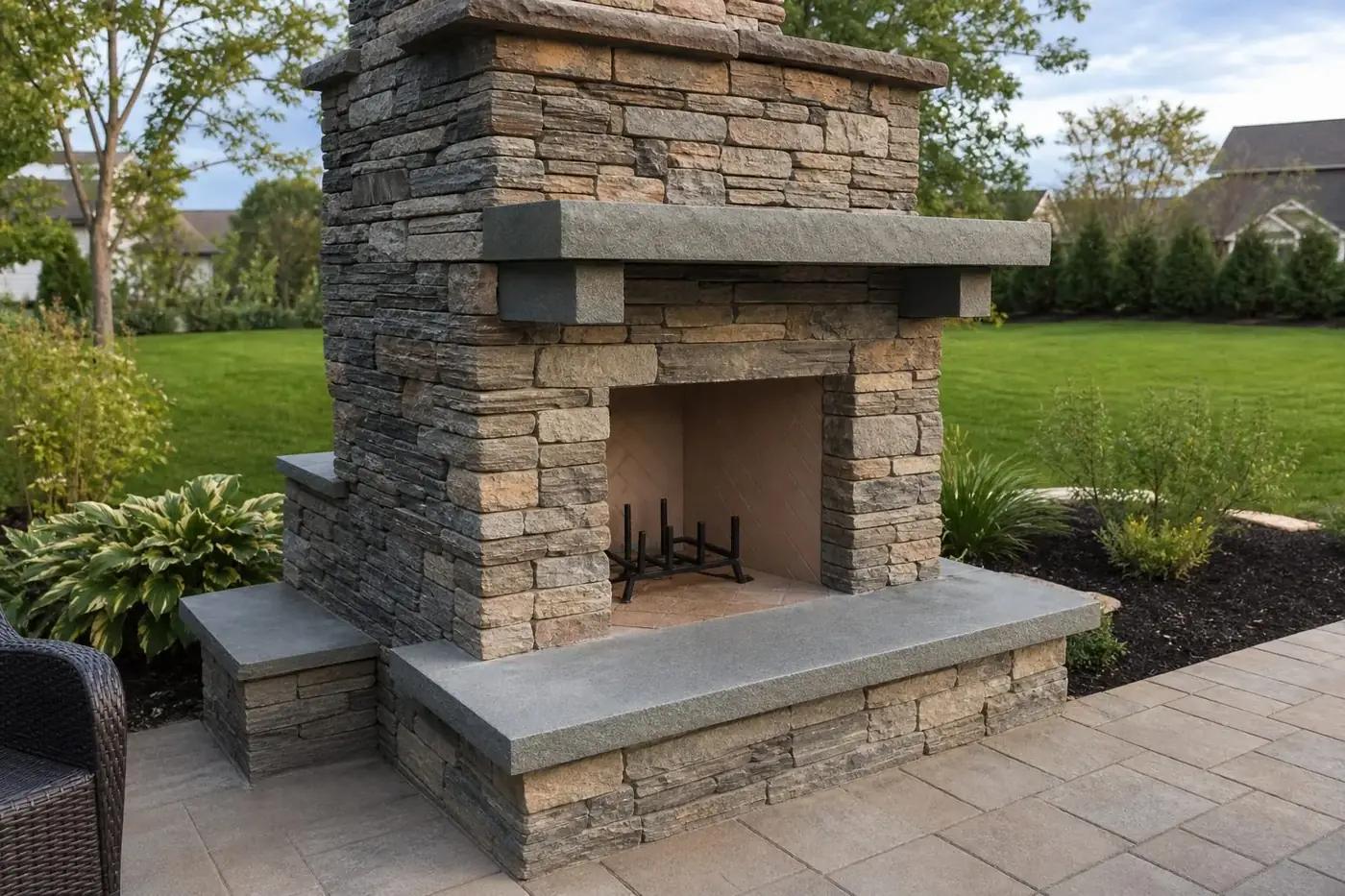
A fireplace is the statement piece. It gives the yard a focal wall, blocks wind, offers privacy from a neighbor's sightline, and directs heat forward toward the seating. It is also the larger investment, because it is a real masonry structure on a real footing.
A fire pit is social in a different way, with everyone facing each other across the flame instead of lining up along a wall. It costs less, takes less space, and suits a smaller patio. Fire tables split the difference for people who want instant gas flame at coffee table height without a permanent structure.
Scale is the part worth slowing down on. A tall fireplace on a small patio dominates the yard and leaves nowhere comfortable to sit, while a fire pit lost in the middle of a large open space never feels like a destination. We mock the footprint on the ground and set chairs around it so you can judge the proportions at full size before any stone is ordered.
- Full masonry fireplaces with firebox, chimney, hearth, and wood storage
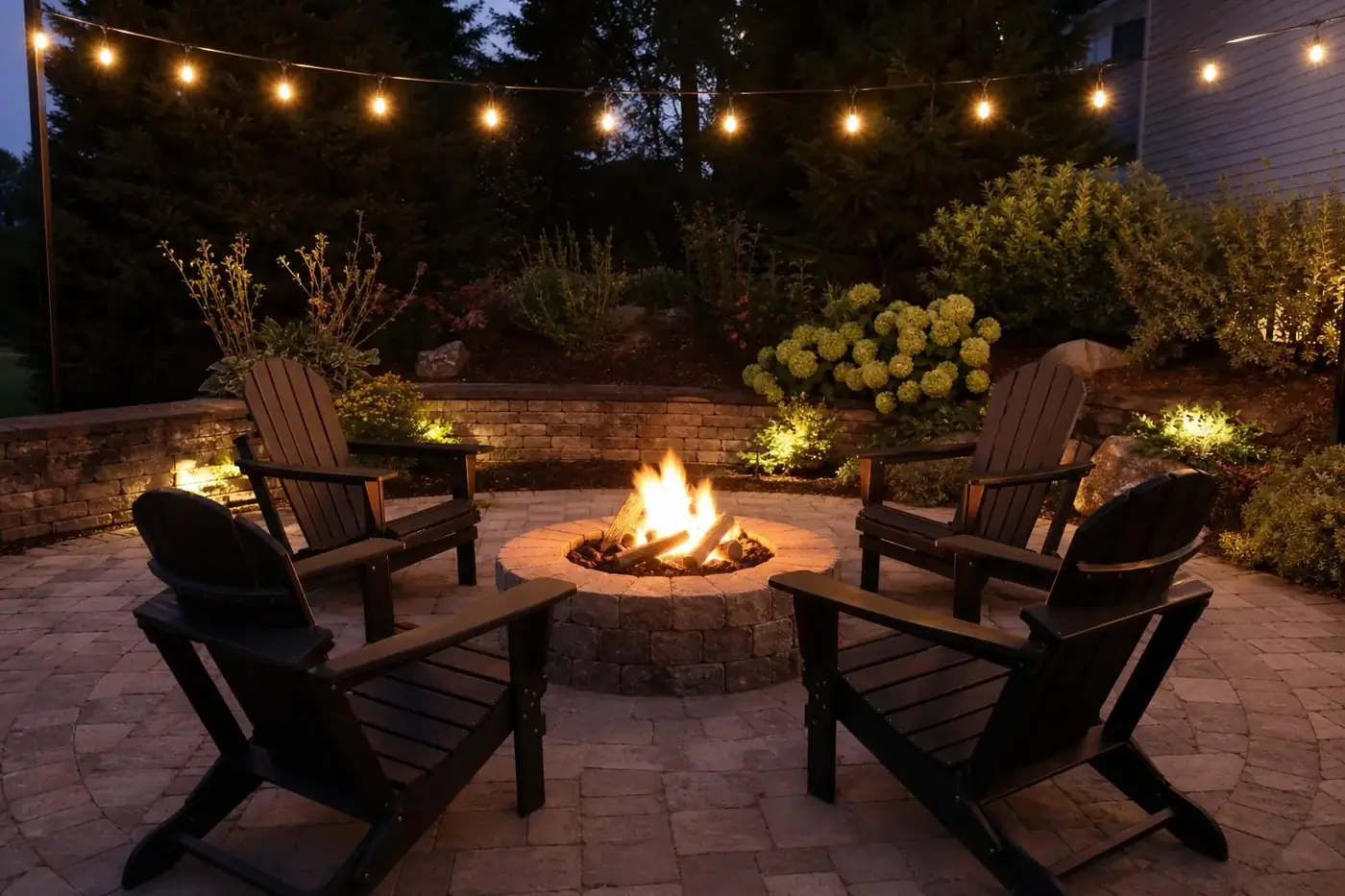
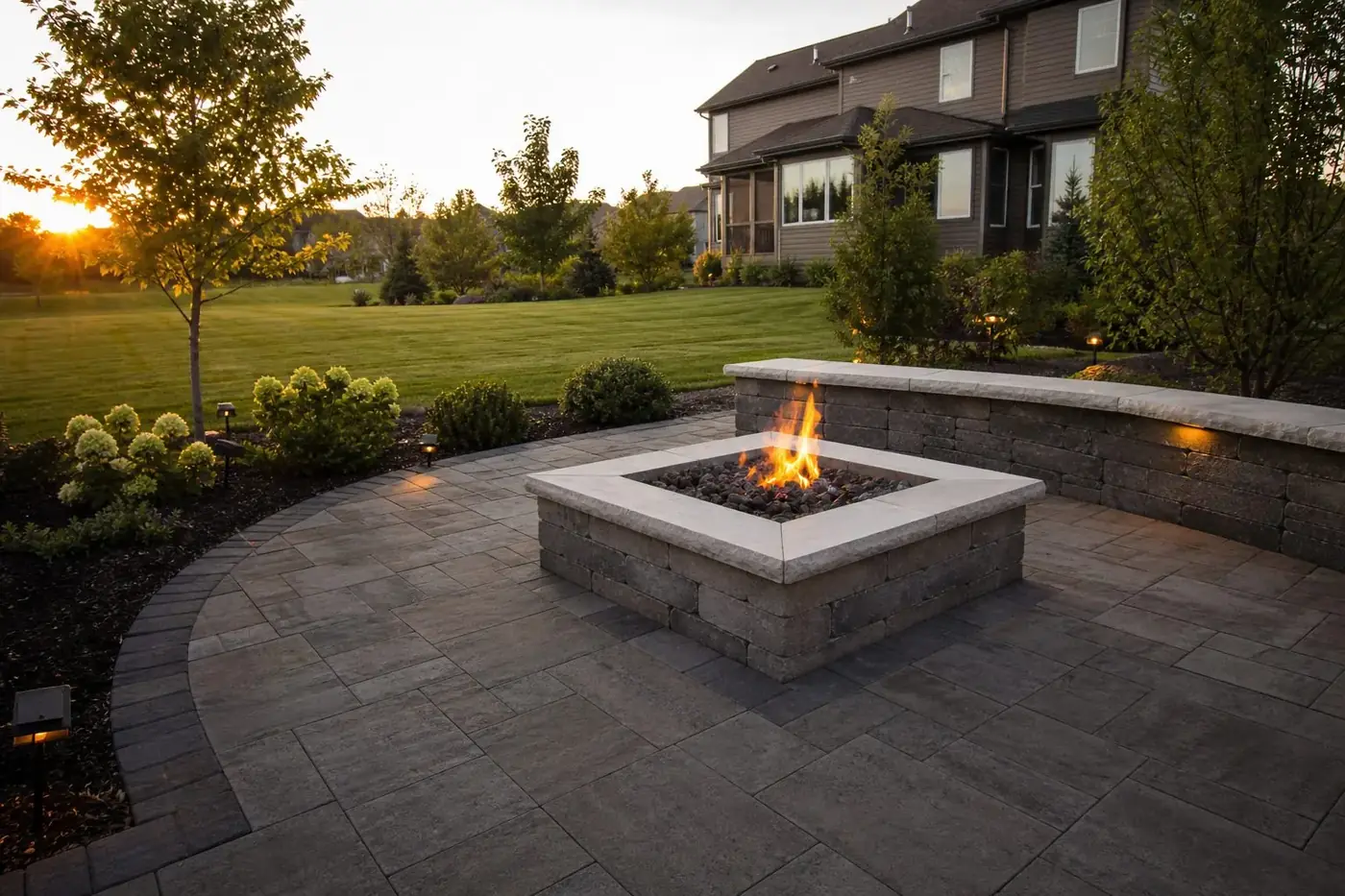
- Built-in circular or square fire pits set into the paver field
- Gas fire tables and linear burners for a low, modern profile
- Wood burning pits with steel insert rings and heat rated liners
- Seat walls arranged around the fire at a comfortable radius
- Stone and paver faces matched to the patio and the house
Wood vs Gas
Choosing a Fuel You Will Actually Use
Be honest about the routine. Wood gives more heat and a better atmosphere, and it also means hauling, stacking, seasoning, lighting, and cleaning ash out of the firebox. Households who love that use their wood fireplace constantly. Households who do not end up with an expensive stone sculpture.
Gas gets used far more often for the simple reason that it lights in five seconds on a Tuesday evening. If the feature is meant to extend ordinary weeknights rather than host occasional bonfires, gas is usually the better decision. Running the line while the patio is open costs a fraction of trenching through finished paving later, which is the same reason we coordinate fire features with any outdoor kitchen gas work in the same trench.
Storage matters more than people expect on a wood burning build. Split wood needs to stay dry and reasonably close to the firebox, so we usually work a covered wood box, a niche in the fireplace mass, or a low stacked bay into the design. Otherwise the firewood ends up in a tarp covered pile at the corner of the house, which is the detail that quietly undoes an otherwise finished looking patio. Fall leaf removal keeps the area around the wood storage and the firebox clear before the burning season starts.
- Wood burning for real heat, crackle, and the smell people associate with a fire
- Natural gas for instant on, no smoke, no ash, and no wood to store
- Propane where a gas line to the feature is not practical
- Gas logs or glass media in a wood style firebox for a hybrid look
- Key valves and igniters placed within safe reach of the seating
Placement & Safety
Clearances, Codes, and Where the Smoke Goes
Placement decides whether a fire feature is a pleasure or a nuisance. We keep the feature well clear of the house, of any wood structure, and of overhanging tree canopy, and we watch the prevailing wind so smoke drifts away from the seating and away from the neighbor's deck. Local ordinances and HOA rules often set their own minimum distances and can restrict open burning, so we confirm both before construction. Gas appliances and gas line work need permits and licensed connection.
The paving under and around a fire feature has to be non combustible and set on a base that will not settle under concentrated weight, which is decided during patio construction. If the fire sits at the edge of a grade change, the retaining wall behind it is planned at the same time so seat wall heights and the fireplace hearth line up.
Overhead structure needs care. Solid roofs and pergolas can coexist with fire, but only with real clearance above the flame and a chimney that terminates well past any framing. We would rather relocate a feature six feet during design than build a permanent hazard.
The PMT Difference
A Lawn & Landscape Company You Can Trust
Homeowners, property managers, and facility teams across Johnson County keep working with us for the same handful of reasons.
01
We know Central Indiana ground
Heavy clay soil, cool-season turf, and Indiana's swing from wet spring to dry August all change how a property should be treated. We plan around the conditions we work in every day.
02
We treat the property like our own
Clean edges, blown-off walks, straightened bed lines. The details you would notice at your own house are the details we finish every visit with.
03
We show up on time and communicate
You know who is coming, when they are coming, and what happens next. From the first estimate through the last cleanup of the season.
04
5.0 stars across 300+ reviews
Locally owned since 2015, licensed, bonded, and insured. Big enough to serve, small enough to care.

Questions & Answers
Outdoor Fireplace & Fire Pit FAQs
Far enough to satisfy local code and common sense, which typically means at least ten feet from any structure or overhanging combustible material for an open wood fire, and often more. Municipal ordinances and HOA rules vary across the Indianapolis area, so we verify the specific requirement for your address.
A freestanding wood burning pit usually does not, though open burning rules still apply. Gas lines, electrical for lighting or igniters, and larger masonry structures generally do require permits and licensed trades. We handle that before the first block is set.
A footing below frost depth, firebrick and refractory mortar in the firebox, exterior grade materials on the exposed face, a cap that sheds water, and detailing that lets moisture drain rather than soak in. Water freezing inside masonry is what breaks it, not the cold air.
Almost always chimney height or firebox proportions. If the flue is too short, too wide, or the smoke chamber is wrong, the fire will not draw and the smoke rolls out at you. Prevailing wind and nearby walls or tree canopy make it worse. Getting the geometry right during design is the fix.
Leave roughly three to four feet between the edge of the fire and the front of the seating, which keeps people warm without scorching shins. Seat walls at about eighteen inches high work for most guests, and we usually mix built-in walls with movable chairs so the group size can flex.
Often yes. We check whether the existing base can carry the load, confirm clearances, and plan the gas or electric route with the least disruption. Pavers can be lifted and reset around a new footing. On a poured slab it is a bigger conversation, and sometimes a freestanding feature on a small adjacent pad is the smarter answer.
Extend Your Season With a Fire Feature
PMT Lawn & Landscape has been building patios, walls, and fire features in Central Indiana since 2015, and fire work sits inside our broader hardscape installation practice so the paving, seating, and gas routing are planned together rather than bolted on. Tell us where you picture sitting and we will bring a design and a number, serving Indianapolis and the surrounding areas.
PMT Lawn & Landscape serves Greenwood, Center Grove, Franklin, Bargersville, Mooresville, and Southport. Call (317) 910-1257 or request an estimate and we will get you on the schedule.
Fireplace, Fire Pit, or Fire Table?
Send photos of the patio and we will talk through fuel, placement, clearances, and what each option costs to build.