
PMT Lawn & Landscape
Patio Construction & Installation
Paver and natural stone patios excavated to depth, compacted in lifts, and drained so the surface you pay for is still flat a decade from now.

Paver & Stone Patios
A Patio Is Only As Good As What Is Under It
PMT Lawn & Landscape is a patio contractor building paver, natural stone, and concrete patios for homeowners across Marion and Johnson counties, serving Indianapolis and the surrounding areas. Call (317) 910-1257 when you are ready to talk through a space, and we will come walk it before anyone quotes a number, or request an estimate.
Almost every failed patio construction project in Central Indiana failed for the same reason. Someone laid good pavers on a base that was too shallow, too fine, or never properly compacted, and then a few winters of freeze and thaw did the rest. Water gets into a soft base, freezes, expands, and lifts the field. Come spring the joints have opened, the edges have crept outward, and the whole surface reads as wavy in low sun. Nothing you do on top fixes that. It has to be rebuilt from the subgrade up.
We approach patio construction the other way around. The base is the project and the pavers are the finish. That means excavating to the depth the soil and the use actually call for, using open graded or dense graded aggregate placed in lifts and compacted between each one, setting positive fall away from the house, and locking the perimeter with proper edge restraint so the field has something to push against. It is unglamorous work that nobody sees, and it is the entire difference between a patio and a future demolition job.
How We Build
The Build Sequence on a Paver Patio
Indianapolis sits on heavy clay that drains slowly and holds water against whatever is built on it. That is why the fabric layer and the base depth matter more here than they would on sandy soil, and why we would rather over excavate by two inches than gamble on the third winter.
Grade is set before the first paver goes down. We plan roughly an eighth of an inch of fall per foot away from the foundation, and where the yard will not cooperate we add a drain line or a dry well into the design rather than hoping the water finds somewhere else to go.
We also protect the rest of the property while we work. Access routes are matted or plated where a machine has to cross turf, spoil is hauled out rather than spread into the beds, and the lawn along the path gets repaired before we leave. A finished patio surrounded by six weeks of rutted yard is not a finished project.
- Utility locates and layout marked on the ground before any digging
- Excavation to subgrade, typically six to twelve inches depending on soil and traffic
- Geotextile fabric over soft clay subgrade to keep base and soil separated
- Aggregate base placed and plate compacted in lifts, not dumped and screeded
- Bedding layer screeded to a consistent depth, never used to correct base grade
- Pavers laid, cut, compacted, then joint sand swept and vibrated in
- Concrete or spiked edge restraint around the full perimeter
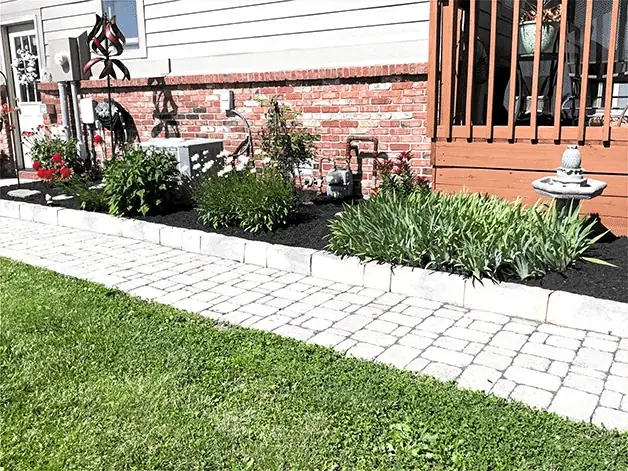
Materials
Paver, Natural Stone, or Concrete Patio
The paver versus concrete patio question comes up on nearly every estimate. Poured concrete is often cheaper up front and it is a fine choice for a simple utility slab. What it does not do well is move. Indiana ground shifts every winter, and a monolithic slab answers that by cracking, usually somewhere you did not want a crack. Repair means patching a visible scar or tearing out the whole pour.
A paver field is thousands of small units over a flexible base. It absorbs seasonal movement instead of fighting it, and if a section ever does need attention, we lift those pavers, fix the base, and reset the same stone. Color runs all the way through the unit rather than sitting on the surface, so a chipped edge does not show as a white scar. For most homeowners the extra cost up front buys a surface that still looks intentional in year fifteen.
Patio installation cost tracks three things: square footage, the material you choose, and how much excavation and drainage work the site needs. A flat, open backyard patio costs meaningfully less per square foot than a sloped lot that has to be cut, retained, and drained before a single paver is set. We price the whole build, not just the surface, so the number does not move after we start.
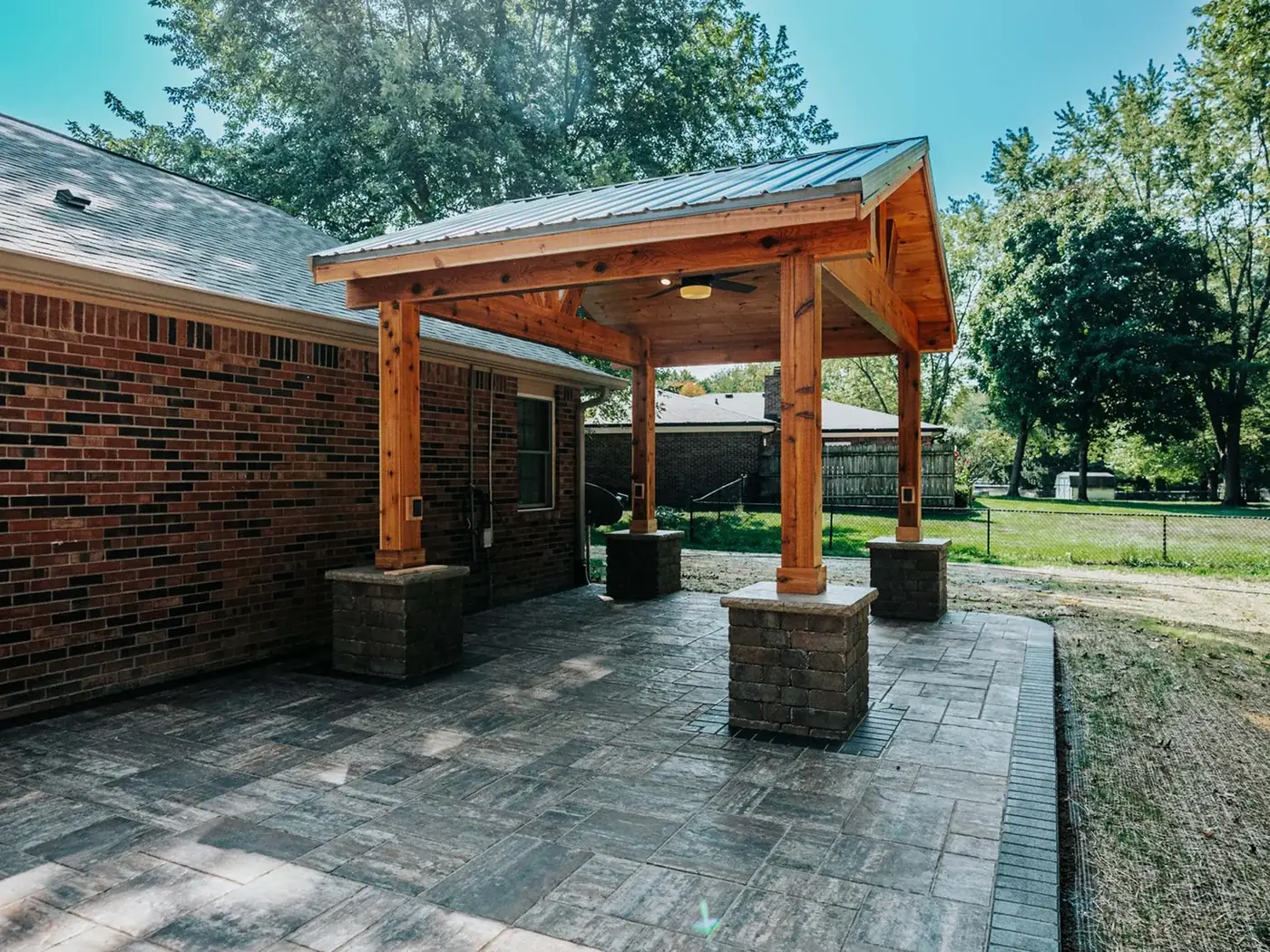
- Concrete pavers in a wide range of colors, formats, and price points
- Tumbled and antiqued pavers for a softer, older look
- Large format slabs for a clean, contemporary surface
- Natural flagstone and irregular stone set on a compacted base
- Permeable paver systems where runoff or drainage is a concern
- Integrated seat walls, steps, borders, and inlaid banding
Design
Sizing and Laying Out a Space People Actually Use
The most common regret we hear about an existing patio is not the material. It is the size. A dining table with chairs pulled out needs roughly a twelve by twelve foot zone before anyone can walk behind a seated guest. A lounge grouping around a fire feature wants something similar. Squeeze both onto a ten by sixteen slab and you have a patio that technically holds furniture and never gets used twice in a summer.
So we start with how you want to spend time out there. Where the sun lands at six in the evening, where the grill smoke blows, which door people come out of, how far the kids run before they hit the lawn. Then we lay it out on the ground with paint and rope so you can stand in the space at real scale before committing. On larger projects we take measurements and video and put together a plan through landscape design so the patio, the plantings, and the lighting all arrive as one idea.
Patios rarely stay a patio. Grade changes usually want a retaining wall or a seat wall to hold the edge, shade usually means a pergola or deck, and cooking outdoors means an outdoor kitchen with enough clear floor around it. Planning those together costs less than opening the same ground twice. Once built, fall leaf removal keeps wet leaves from staining the pavers and clogging the drainage you paid for.
The PMT Difference
A Lawn & Landscape Company You Can Trust
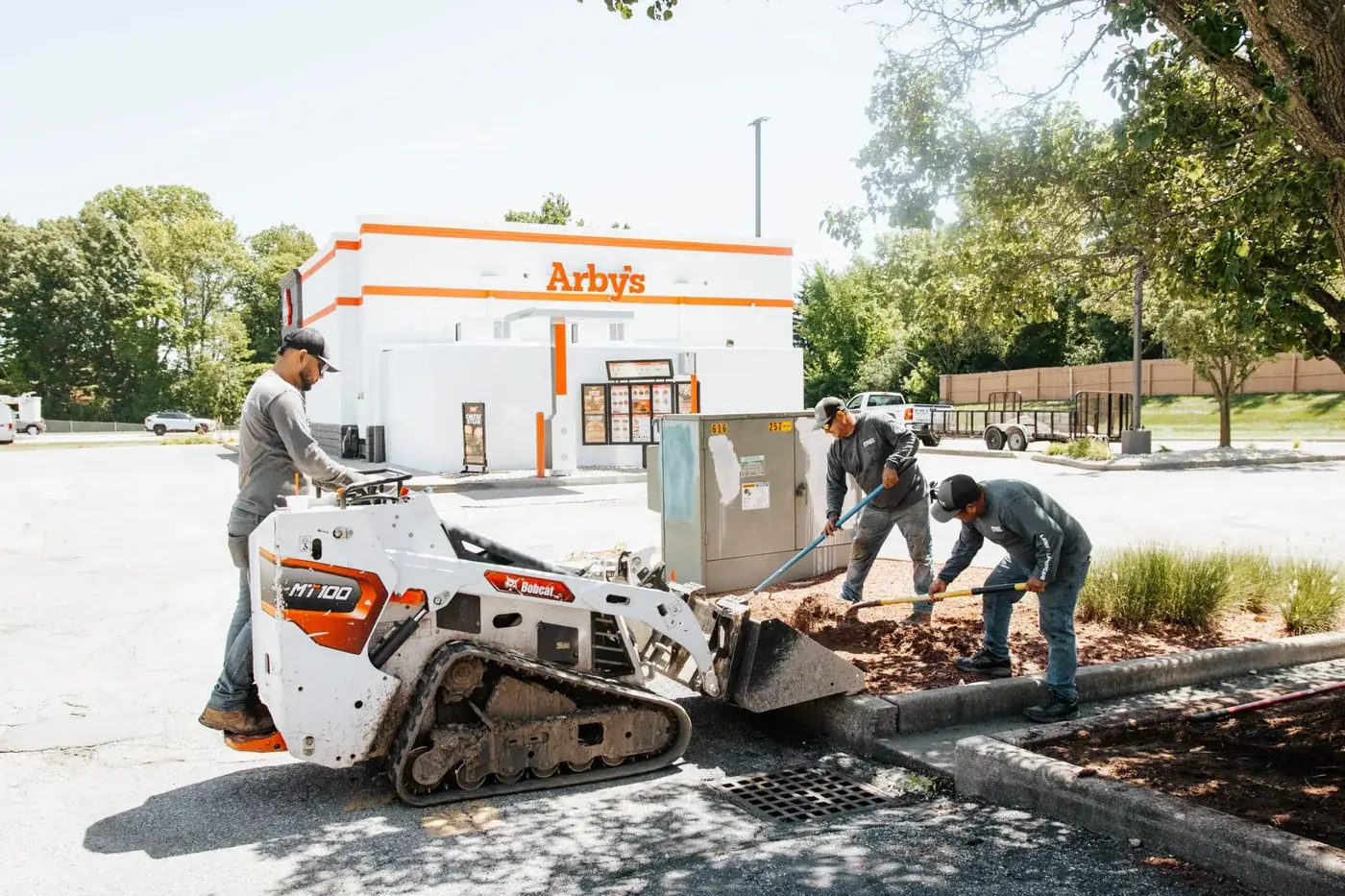
Homeowners, property managers, and facility teams across Johnson County keep working with us for the same handful of reasons.
01
We know Central Indiana ground
Heavy clay soil, cool-season turf, and Indiana's swing from wet spring to dry August all change how a property should be treated. We plan around the conditions we work in every day.
02
We treat the property like our own
Clean edges, blown-off walks, straightened bed lines. The details you would notice at your own house are the details we finish every visit with.
03
We show up on time and communicate
You know who is coming, when they are coming, and what happens next. From the first estimate through the last cleanup of the season.
04
5.0 stars across 300+ reviews
Locally owned since 2015, licensed, bonded, and insured. Big enough to serve, small enough to care.

Questions & Answers
Patio Construction FAQs
For a residential patio on our clay soils we typically excavate six to eight inches below the finished paver, and deeper where the subgrade is soft or where vehicles will cross. Depth is set by what we find when we open the ground, not by a number on a brochure. Compaction between lifts matters as much as total depth.
Not if water cannot sit under it. Heaving is a drainage problem that shows up as a frost problem. We separate base from clay with fabric, compact in lifts, pitch the surface away from the house, and add drainage where the yard needs it. That combination is what keeps a field flat through freeze and thaw.
Poured concrete is reasonable for a small, plain slab on a tight budget. For anything you intend to look at for twenty years, we recommend pavers. They flex with seasonal movement instead of cracking, they can be repaired in place, and the color goes all the way through the unit.
A straightforward patio is usually three to five days on site once material is delivered. Steps, seat walls, lighting, or a built-in fire feature push it toward one to two weeks. Material lead times in spring are often the longest part of the schedule, so early planning buys you a summer.
A ground level patio usually does not require a permit, though requirements vary by municipality and by HOA, and anything near a drainage or utility easement gets checked first. Attached structures, elevated decks, and taller walls are a different story. We confirm with the local authority before we dig and we always call in utility locates.
Very little. Sweep it, rinse it, top off joint sand every few years, and consider a sealer if you want the color to stay rich. Weeds in the joints are almost always seed blown in from above rather than growth from below, so a polymeric joint sand and routine cleaning handle most of it.
Build the Patio Once, Build It Right
PMT Lawn & Landscape has been installing patios and outdoor living space in Central Indiana since 2015, and patio work sits inside our wider hardscape installation practice, so the walls, steps, and fire features around it are built by the same crew to the same standard. Send us photos and rough dimensions or have us walk the yard, and you will get a real plan and a real number, serving Indianapolis and the surrounding areas.
PMT Lawn & Landscape serves Greenwood, Center Grove, Franklin, Bargersville, Mooresville, and Southport. Call (317) 910-1257 or request an estimate and we will get you on the schedule.
Ready to Plan Your Patio?
Tell us how you want to use the space and we will lay it out, size it honestly, and price the base along with the pavers.