
PMT Lawn & Landscape
Lawn Fertilization
Granular and liquid feeding schedules matched to your turf type, your soil, and the way Central Indiana weather actually behaves from March through November.

Residential Lawn Care
Feeding Turf on a Cool Season Calendar
PMT Lawn & Landscape has been feeding cool season lawns since 2015, serving Indianapolis and the surrounding areas. Lawn fertilization on a real schedule is the single input that decides whether a lawn merely survives the year or actually thickens, and the difference is almost always timing rather than product. Call (317) 910-1257 and we will look at the turf before we quote a program, or request an estimate.
Most yards on the south side sit on heavy clay that was scraped, piled and compacted during construction. Clay holds nutrients reasonably well, but it drains slowly, warms slowly in spring, and bakes hard by August. A feeding plan that ignores that reality either pushes soft top growth in May that collapses in July, or starves the plant in the fall window when roots do most of their real work. We build the schedule around the soil we are standing on.
Fertilization is one piece of the wider program described on our lawn treatments page. This page covers the lawn fertilization side specifically, what goes down, when, why, and what you should expect to see afterward.
The Schedule
What a Season of Feeding Looks Like
Cool season grasses such as tall fescue and Kentucky bluegrass have two natural growth peaks, one in spring and a larger one in fall. Our rates follow those peaks instead of fighting them. Spring feeding is deliberately restrained. Dumping nitrogen in April produces lush blade growth on a root system that has not caught up yet, and that lawn is the first one to go off colour when the rain stops in mid July.
Fall is where lawns are actually built in this part of Indiana. Soil is still warm, nights are cooler, weed pressure has dropped, and the plant puts its energy into roots and tillers. The early fall and late fall applications are the two we least like to miss, and they are the reason a lawn on program looks different in its second year than it did in its first. Those fall feedings only work on turf that is clear, so on tree-heavy lots we schedule leaf removal ahead of each application.
- Early spring: light feeding to green up without forcing soft growth
- Late spring: balanced application to carry the lawn toward summer
- Summer: slow release nitrogen at reduced rates during heat stress
- Early fall: the heaviest feeding of the year, when roots recover
- Late fall: a final application that stores energy for spring green up
Soil First
Clay, pH, and Why Products Underperform
Nutrients only matter if the plant can take them up. Central Indiana clay commonly runs acidic, and at a low pH phosphorus and several micronutrients bind up in the soil where roots cannot reach them. You can spread a perfectly good fertilizer on that lawn three times a year and see very little for it. When a lawn has been struggling for seasons with no obvious cause, a soil test is the cheapest answer, and lime is often part of the correction.
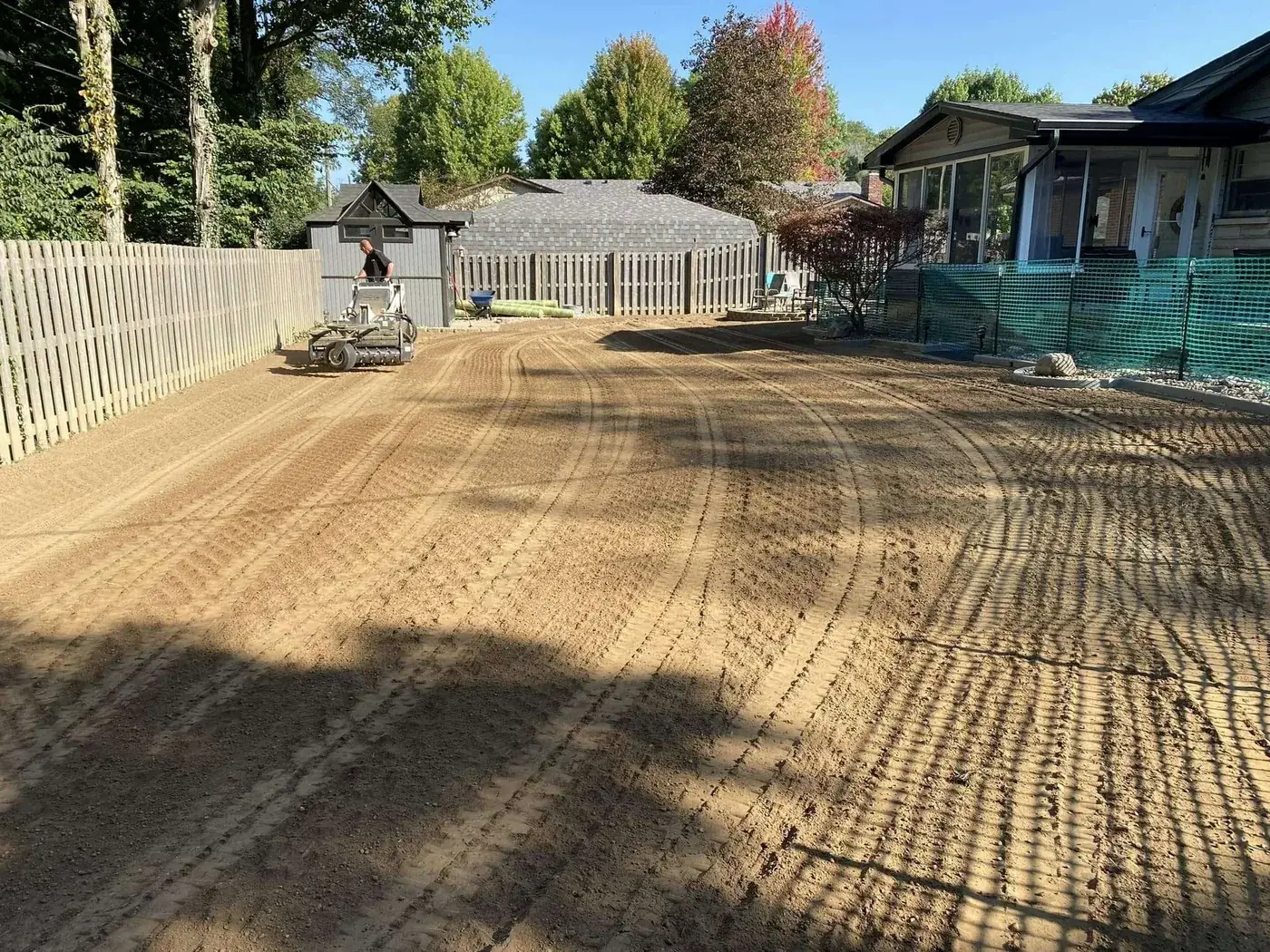
Compaction is the other limiting factor. Roots need air, and clay that has been driven on, played on, or simply left alone for a decade gets dense enough to stall them. That is why we pair feeding with fall aeration and overseeding. Pulling cores opens the profile, the fall fertilizer moves into the root zone instead of sitting on the surface, and new seed lands in holes rather than on thatch.
Mowing habits matter just as much. Cutting a fescue lawn short in summer removes the leaf surface that feeds the roots, and no fertilizer plan can compensate for that. Clients who bundle feeding with weekly mowing and lawn maintenance get a single crew accountable for height, frequency, and clipping return, which is a bigger lever on colour than most homeowners expect.
What You Will See
Realistic Expectations, Season by Season
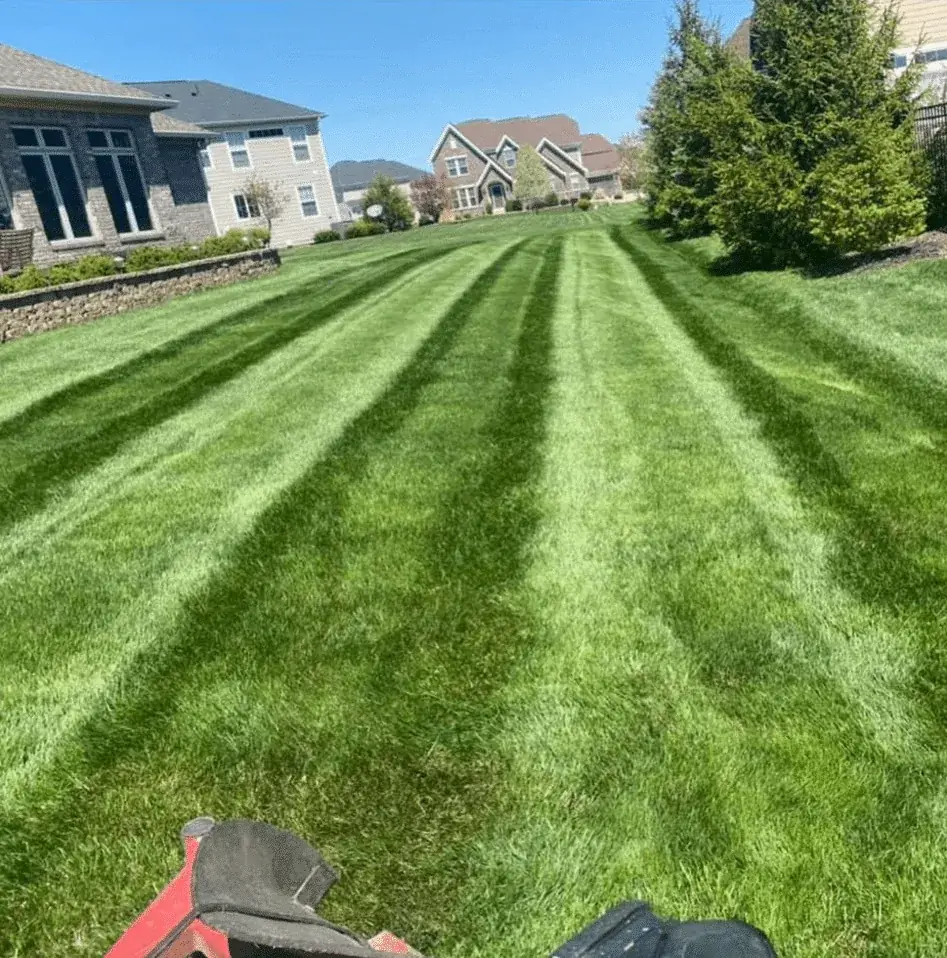
In year one, expect colour to improve within a couple of weeks of the first application and density to improve gradually through fall. A lawn that is thin because of shade, grade, or years of compaction will not fill in from fertilizer alone, and we will tell you that at the estimate rather than after the third invoice.
In year two, the change is structural. Thicker turf shades the soil surface, holds moisture longer, and crowds out the weeds that took advantage of bare ground. Most properties need fewer corrective treatments in their second and third seasons because the stand itself is doing the defending. Beds and borders benefit too, which is why feeding pairs naturally with ongoing landscape maintenance on the same property.
What we will not promise is a lawn that looks like a golf course by the middle of the first summer. Tall fescue and Kentucky bluegrass in this climate are working against clay, heat, and whatever the previous few seasons did to them, and honest progress is measured across fall to fall rather than week to week. Every visit is documented so you can see the plan moving, what went down, at what rate, what the turf looked like, and what the next application is meant to fix.
The PMT Difference
A Lawn & Landscape Company You Can Trust
Homeowners, property managers, and facility teams across Johnson County keep working with us for the same handful of reasons.
01
We know Central Indiana ground
Heavy clay soil, cool-season turf, and Indiana's swing from wet spring to dry August all change how a property should be treated. We plan around the conditions we work in every day.
02
We treat the property like our own
Clean edges, blown-off walks, straightened bed lines. The details you would notice at your own house are the details we finish every visit with.
03
We show up on time and communicate
You know who is coming, when they are coming, and what happens next. From the first estimate through the last cleanup of the season.
04
5.0 stars across 300+ reviews
Locally owned since 2015, licensed, bonded, and insured. Big enough to serve, small enough to care.
Questions & Answers
Lawn Fertilization FAQs
Most Indianapolis area lawns do well on four to six feedings across the season, weighted toward fall. Newer sod, heavily used back yards, and lawns recovering from neglect sit at the higher end. We would rather run the right number of correctly timed visits than sell a fixed package that does not fit the property.
Both, depending on the visit. Granular slow release carries the lawn through longer stretches and is our default for the heavy fall feedings. Liquid gives a faster, more even response and works well in spring or when we are pairing a feeding with a targeted treatment on the same pass.
Granular products need moisture to move into the soil, so a good rain or roughly a half inch of irrigation within a few days after the visit gets the most out of it. Liquid applications need drying time on the blade first. We leave notice on every visit telling you which one applies.
Not on a properly built program. Summer visits use slow release nitrogen at reduced rates, and we adjust or reschedule when the forecast turns hot and dry. Heat stress on tall fescue and Kentucky bluegrass is a real risk in a Central Indiana August, and pushing growth into it is the fastest way to thin a lawn.
It helps a great deal over time, because dense turf leaves weeds nowhere to establish, but it is not a substitute for correctly timed weed control. Crabgrass in particular needs a pre-emergent barrier in place before soil temperatures climb, no matter how well fed the lawn is.
Yes, on a separate schedule built around access and tenant traffic. See commercial lawn treatments for how those programs are structured across larger sites.
Put Your Lawn on a Feeding Schedule That Fits It
A fertilization program is a year of small, correctly timed decisions, and it compounds. PMT Lawn & Landscape has been building those schedules for clay soil and cool season turf since 2015, and we will tell you honestly whether feeding is your limiting factor or whether compaction, pH, or mowing height needs to be addressed first. If your lawn goes off colour every July, thins a little more each fall, or simply never looks the way you expected, we can take it over, serving Indianapolis and the surrounding areas.
PMT Lawn & Landscape serves Greenwood, Center Grove, Franklin, Bargersville, Mooresville, and Southport. Call (317) 910-1257 or request an estimate and we will get you on the schedule.
Ready for Turf That Holds Its Colour?
Tell us what the lawn has been doing and we will build a feeding schedule and a price around it.