
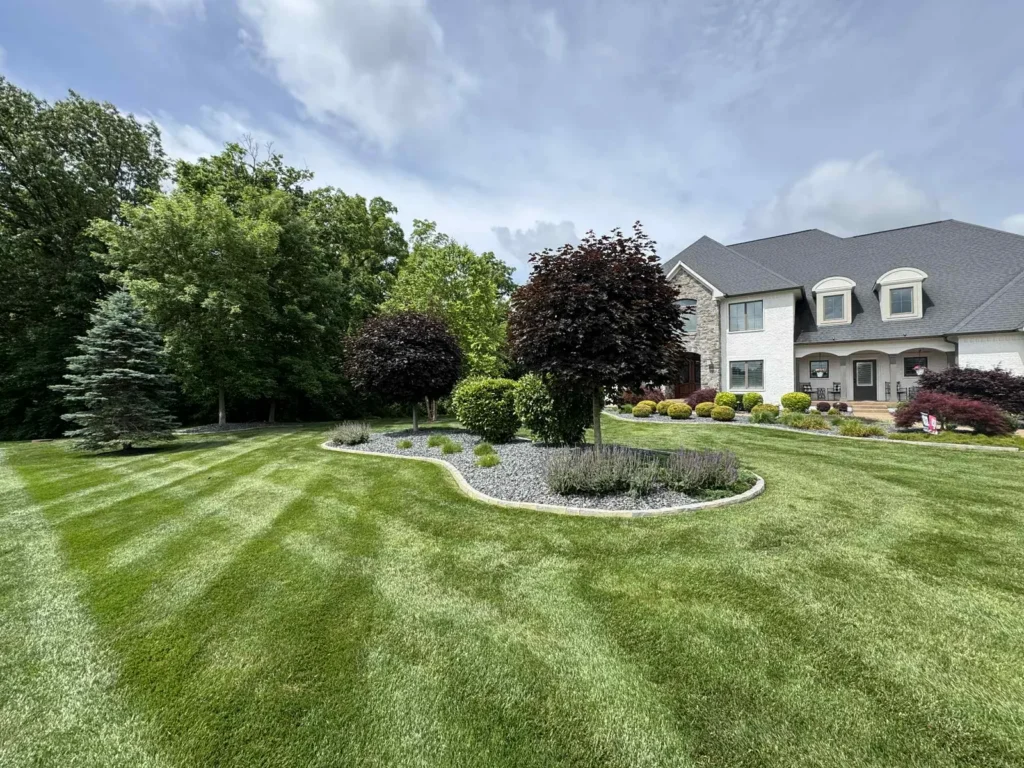
Maintaining a lush and healthy lawn in Central Indiana requires a well-planned seasonal care calendar. This guide will provide you with essential tasks and timelines for fertilization, aeration, and maintenance tailored to the unique climate and soil conditions of the region. Understanding the optimal times for these activities can significantly enhance your lawn’s health and appearance. Many homeowners struggle with knowing when to perform these tasks, leading to suboptimal lawn conditions. By following this comprehensive calendar, you can ensure your lawn receives the care it needs throughout the year. This article will cover the optimal fertilization schedule, spring preparation tasks, summer maintenance practices, aeration and overseeding techniques, winter protection measures, and common lawn diseases and weed control strategies.
Research underscores the importance of strategic fertilizer application to minimize environmental impact.
Nitrogen Mobilization and Fertilizer Application Timing in Lawns 1. Identifying locations prone to exporting nitrogen (N), also called export control points, within residential landscapes, is key to determining N mitigation strategies. Within residential landscapes, lawns have the potential to act as either a sink of N via uptake and denitrification, or a source of N via additions such as fertilizer. Lawns draining to impervious surfaces are more likely to be sources of N loading to receiving water bodies through directly connected curb and sewer flow paths. We utilized small-scale rainfall experiments to examine whether hydrobiogeochemical measurements of potential denitrification and saturated infiltration rates were predictive of N mobilization, and how potential export control points (locations within the upper quartile of N mobilization values) varied spatially and temporally on residential lawns in Baltimore, Maryland. We found potential denitrification, but not infiltration, was predictive of N mobilization in runoff and leachate, only on fertilized lawns. Potential export control points occurred more often in the late summer and fall and 85% were on fertilized lawns. Applying fertilizer shortly before a rainfall event increased the N mobilization in runoff and leachate by an order of magnitude. Suburban front yards also had more potential export control points compared to backyards, which is notable as front yards are surrounded by impervious surfaces increasing their vulnerability to transporting N to downstream ecosystems. These findings highlight the spatial and temporal variability of N mobilization on lawns. Targeting locations such as vulnerable front yards, or behaviors, such as timing of fertilizer application, may be useful N mitigation strategies. Spatial and temporal patterns of nitrogen mobilization in residential lawns, AK Suchy, 2023
Write for meBased on entire blockQuota 0/300What is the optimal lawn fertilization schedule for Central Indiana?
Fertilization is a critical component of lawn care, providing essential nutrients that promote growth and resilience. In Central Indiana, the timing of fertilization is crucial due to the region’s distinct seasonal changes. Proper fertilization not only enhances the lawn’s color and density but also improves its overall health. Understanding when to fertilize can lead to a vibrant and thriving lawn throughout the year.
When should you apply spring and fall fertilization in Central Indiana?
In Central Indiana, spring fertilization should ideally occur between mid-April and early May, just as the grass begins to actively grow. This timing allows the lawn to absorb nutrients effectively, promoting robust growth. Fall fertilization is best scheduled for early to mid-October, which helps the grass store nutrients for the winter months and encourages early spring growth.
What types of fertilizers are best suited for Central Indiana lawns?
For Central Indiana lawns, a balanced fertilizer with a ratio of nitrogen, phosphorus, and potassium (N-P-K) is recommended. Organic fertilizers, such as compost or well-rotted manure, can also be beneficial as they improve soil health over time. Additionally, slow-release fertilizers are ideal as they provide a steady supply of nutrients, reducing the risk of nutrient runoff and promoting sustained growth.
How to prepare your lawn for spring in Central Indiana?
Preparing your lawn for spring is essential to ensure it thrives during the growing season. This preparation involves several key tasks that help establish a strong foundation for your lawn’s health. By taking the time to prepare your lawn properly, you can enhance its resilience against pests and diseases while promoting lush growth.
What are the essential spring lawn preparation tasks?
- Mowing: Begin mowing as soon as the grass starts to grow, keeping the mower blades sharp to avoid damaging the grass.
- Raking: Remove any debris, such as leaves and twigs, to allow sunlight to reach the grass.
- Fertilization: Apply a balanced fertilizer to provide the necessary nutrients for growth.
- Aeration: Aerate the lawn to relieve soil compaction and improve water and nutrient absorption.
How does spring fertilization improve lawn health?
Spring fertilization enhances lawn health by providing essential nutrients that support growth and recovery from winter dormancy. This process improves nutrient absorption, leading to greener, denser grass. Additionally, it helps the lawn develop a robust root system, making it more resilient to drought and disease throughout the growing season.
What are the best practices for summer lawn maintenance and pest control in Central Indiana?
Summer maintenance is crucial for keeping your lawn healthy and vibrant during the hotter months. This period often brings challenges such as heat stress and increased pest activity. Implementing effective maintenance practices can help mitigate these issues and ensure your lawn remains in top condition.
How to manage common summer lawn pests and weeds?
Managing summer pests and weeds involves several strategies:
- Regular Monitoring: Keep an eye out for signs of pests, such as discoloration or wilting grass.
- Cultural Practices: Maintain proper mowing heights and watering schedules to promote healthy grass that can outcompete weeds.
- Targeted Treatments: Use appropriate pesticides or herbicides as needed, following label instructions carefully to minimize environmental impact.
What summer maintenance tasks support lawn vitality?
Key summer maintenance tasks include:
- Watering: Ensure your lawn receives adequate moisture, ideally 1-1.5 inches per week, either through rainfall or irrigation.
- Mowing: Mow regularly, keeping the grass at a height of 3-4 inches to promote deeper root growth and shade out weeds.
- Fertilization: Consider a light application of fertilizer in mid-summer to support ongoing growth.
When and how should you aerate and overseed your lawn in Central Indiana?
Aeration and overseeding are vital practices that enhance lawn health by improving soil conditions and promoting new grass growth. These processes are particularly effective in the fall when the weather is cooler, and the grass can establish itself before winter.
Why is fall the best time for aeration and overseeding?
Fall is the optimal time for aeration and overseeding in Central Indiana due to favorable soil temperatures and moisture levels. The cooler weather reduces stress on the grass, allowing it to recover quickly from aeration. Additionally, overseeding during this time helps fill in bare spots and improve lawn density before winter.
What is the step-by-step process for effective aeration and overseeding?
The process for effective aeration and overseeding includes:
- Mowing: Mow the lawn to a lower height to facilitate aeration.
- Aeration: Use a core aerator to remove plugs of soil, allowing air, water, and nutrients to penetrate the soil.
- Seeding: Spread high-quality grass seed evenly across the lawn, focusing on areas that need improvement.
- Watering: Water the newly seeded areas regularly to keep the soil moist until the grass is established.
How to protect and plan your lawn care during winter in Central Indiana?
Winter can be harsh on lawns, making it essential to implement protective measures to ensure their health. Proper planning during this season can set the stage for a successful spring.
What winter lawn protection measures are recommended?
Recommended winter protection measures include:
- Mulching: Apply a layer of mulch to protect the soil and grass from extreme cold.
- Soil Testing: Conduct a soil test to determine nutrient levels and pH, allowing for informed fertilization in the spring.
- Avoid Traffic: Minimize foot traffic on the lawn during winter to prevent soil compaction and damage to dormant grass.
How to plan your lawn care calendar for the upcoming year?
Planning your lawn care calendar involves setting specific goals and scheduling tasks throughout the year. Consider the following steps:
- Set Goals: Determine what you want to achieve with your lawn, such as improved color or density.
- Create a Schedule: Outline key tasks for each season, including fertilization, aeration, and pest control.
- Monitor Progress: Regularly assess your lawn’s health and adjust your care plan as needed.
What are common lawn diseases and weed control strategies for Central Indiana?
Understanding common lawn diseases and effective weed control strategies is essential for maintaining a healthy lawn. Identifying issues early can prevent more significant problems down the line.
Which lawn diseases affect Central Indiana and how to identify them?
Common lawn diseases in Central Indiana include:
- Brown Patch: Characterized by circular brown patches in the lawn, often caused by excess moisture and high temperatures.
- Dollar Spot: Appears as small, round, light brown patches, typically associated with low nitrogen levels.
- Powdery Mildew: A white, powdery fungus that can develop in shaded areas with poor air circulation.
As climate patterns shift, understanding these potential impacts becomes even more critical for successful lawn management.
Climate Change Impacts on Indiana Lawn Care and Green Infrastructure Urban areas around the world are increasingly investing in networks of urban forests, gardens, and other forms of green infrastructure for their benefits, including enhanced livability, sustainability, and climate change mitigation and adaptation. Proactive planning for climate change requires anticipating potential climate change impacts to green infrastructure and adjusting management strategies accordingly. We apply climate change projections for the Midwest US state of Indiana to assess the possible impacts of climate change on common forms of urban green infrastructure and identify management implications. Projected changes in Indiana’s temperature and precipitation could pose numerous management challenges for urban green infrastructure, including water stress, pests, weeds, disease, invasive species, flooding, frost risk, and timing of maintenance. Meeting these challenges will involve managing for key characteristics of resilient systems (e.g., biodiversity, redundancy) as well as more specific strategies addressing particular climate changes (e.g., shifting species compositions, building soil water holding capacity). Climate change also presents opportunities to promote urban green infrastructure. Unlike human built infrastructure, green infrastructure is conducive to grassroots stewardship and governance, relieving climate change-related strains on municipal budgets. Resources for adapting urban green infrastructure to climate change are already being applied to the management of urban green infrastructure, and emerging research will enhance understanding of best management practices. Implications of climate change for managing urban green infrastructure: An Indiana, US case study, HL Reynolds, 2020
What integrated weed control methods are effective locally?
Effective integrated weed control methods include:
- Cultural Practices: Maintain healthy grass through proper mowing, watering, and fertilization to outcompete weeds.
- Mechanical Control: Hand-pulling or using a hoe to remove weeds before they set seed.
- Chemical Control: Apply pre-emergent herbicides in early spring to prevent weed germination, following label instructions for safe use.